


🐹
Loading...Loading Whisker Hollow...
Please wait while we prepare your hamstery
Complete guide to Syrian hamster genetics, coat colors, and inheritance patterns
Each hamster carries two alleles for every gene, one inherited from each parent.
You usually see phenotype (what the hamster looks like), not genotype (the genes themselves).
Show if at least one copy is present.
Examples: Banded pattern, Umbrous shading, Satin coat.
A hamster can show a dominant trait while still carrying other hidden genes.
Only appear if both gene copies match.
Examples: Black, Cream, Cinnamon, Longhair.
Recessive traits can remain hidden for many generations.
A hamster's visible color is calculated in layers, applied in a fixed order:
Key rule: 👉 Modifiers never replace the base color — they only adjust it.
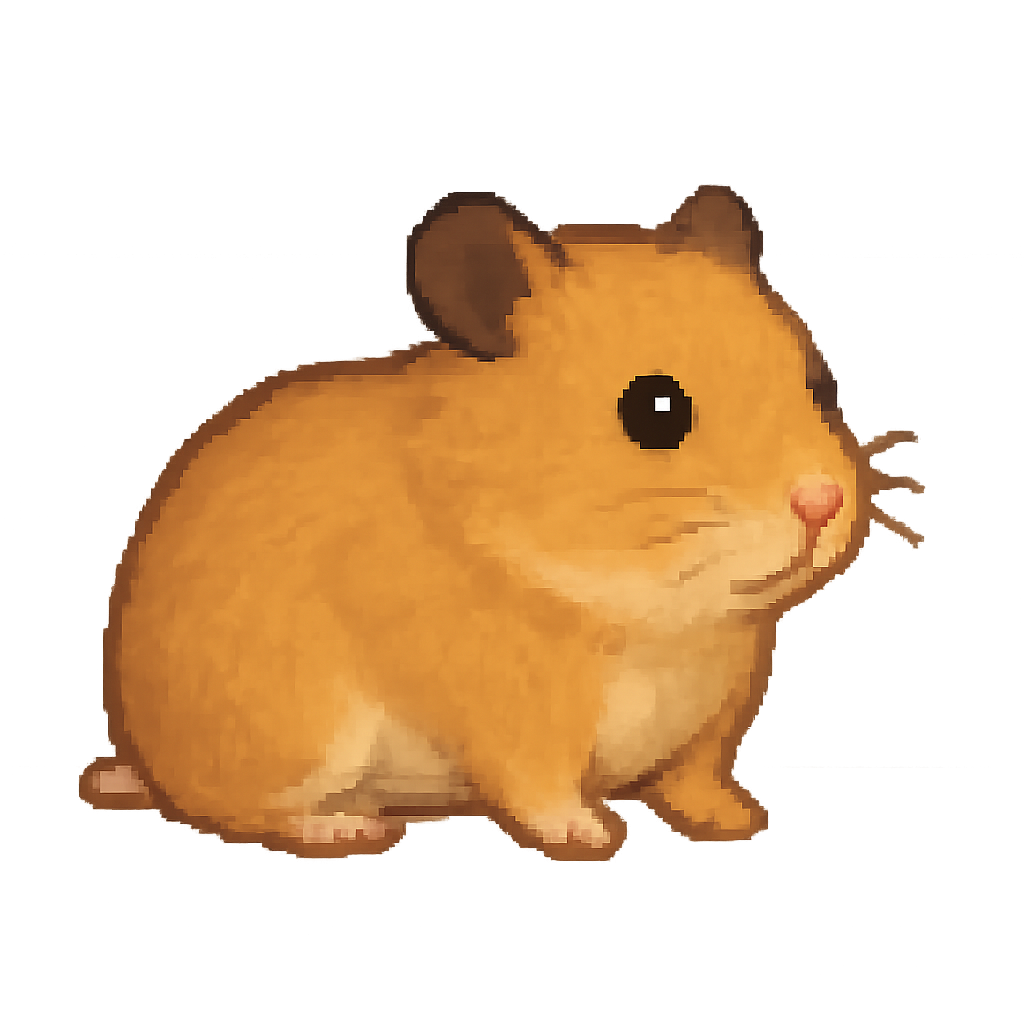
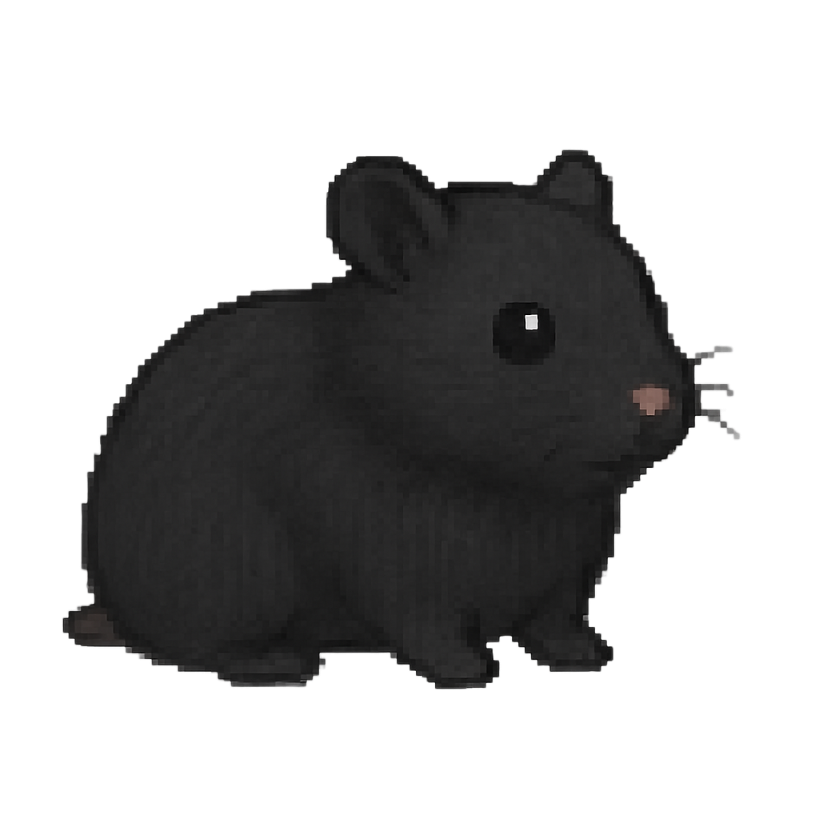
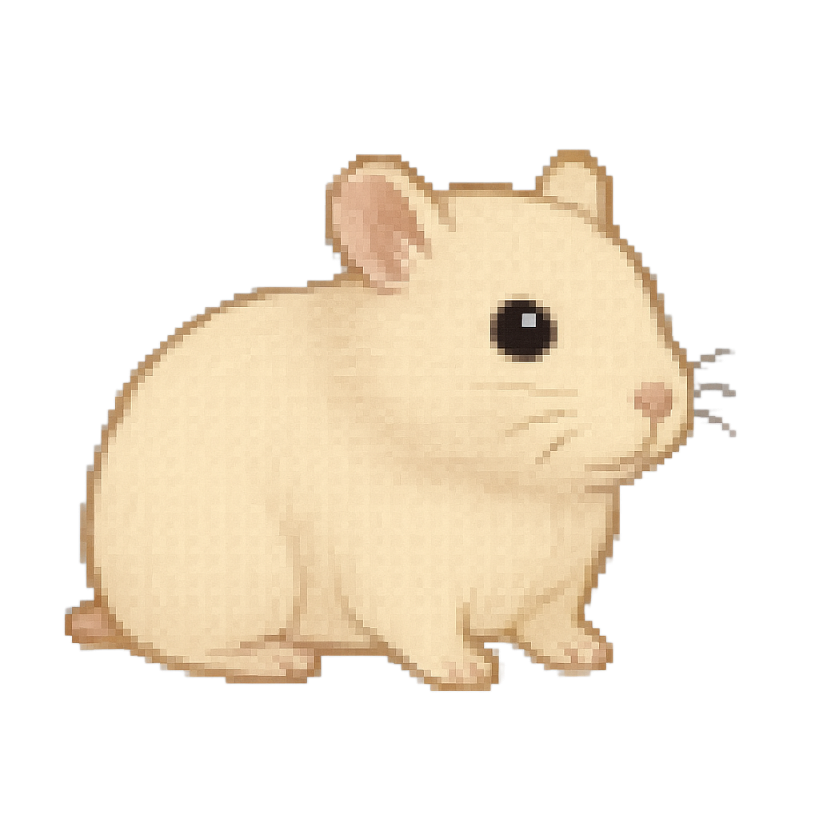
Sprite System: All colors use one of three base sprites (cream, golden, or black) with CSS filters applied. This ensures consistent, readable sprites while supporting all color variations.
Visual markings layered on top of color. Common patterns include Banded, Dominant Spot, Roan, and Piebald.
Patterns never change the base color — they add contrast and markings.
Affect texture, not color. Examples: Longhaired, Rex (curly), Satin (glossy).
Some coat types influence show scoring or care needs.
Default (wild type)
ruru gene
pp, cdcd, or Whwh